
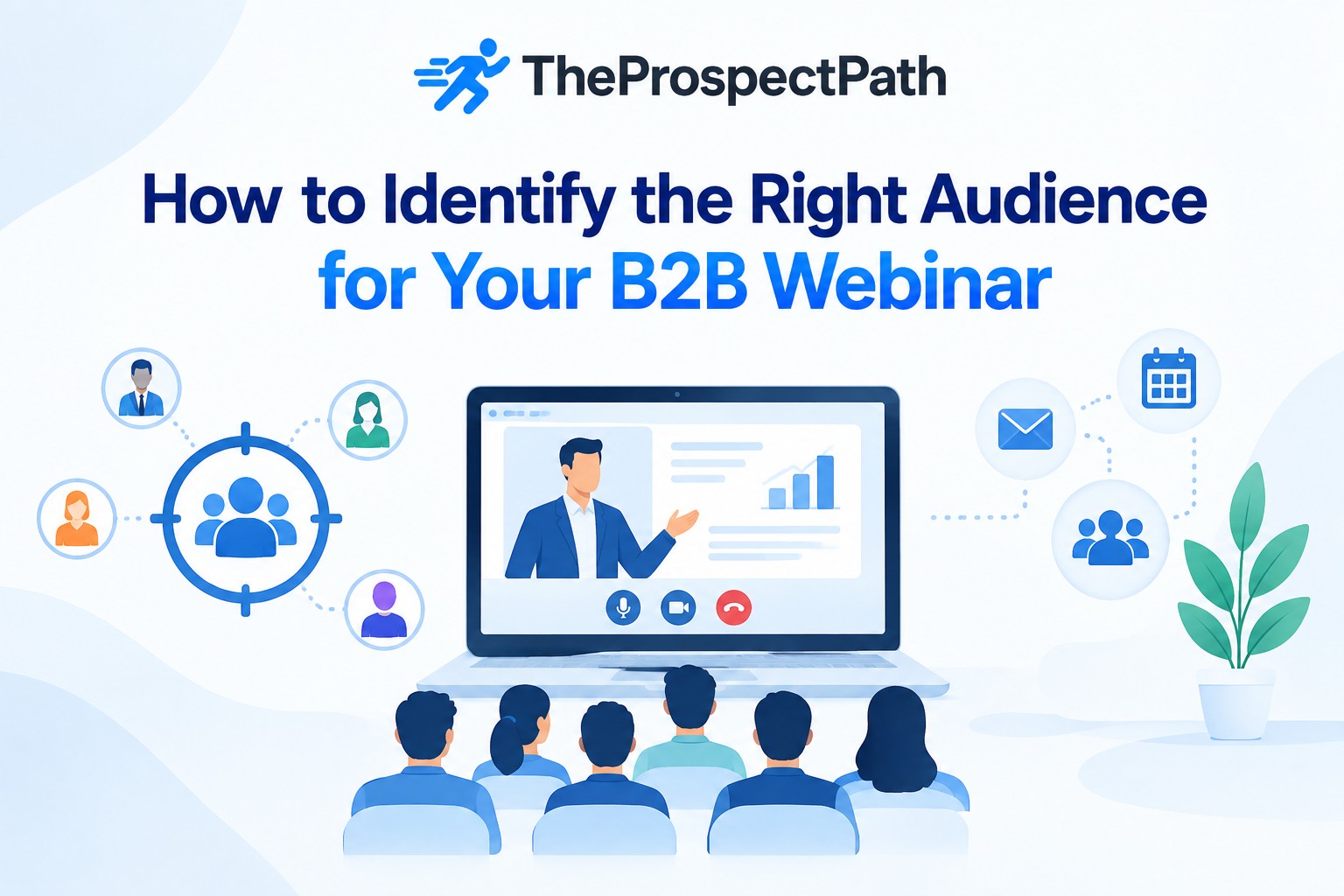
A successful B2B webinar starts long before the event itself. While engaging speakers, valuable content, and professional promotion are important, the quality of the audience can have an even greater impact on the results. A webinar filled with registrations is not necessarily successful if most attendees have little connection to the subject, lack buying influence, or do not fit the company’s ideal customer profile.
For B2B marketers, the goal should be to attract the right audience, not simply the largest audience. Identifying the right prospects helps improve registration quality, engagement, conversations with sales teams, and the potential for future business opportunities. A well-defined audience also makes it easier to create relevant messaging and choose the right promotional channels.
Start With Your Ideal Customer Profile
The first step in identifying the right webinar audience is to understand your Ideal Customer Profile (ICP). The ICP defines the type of organization that is most relevant to the products or services being promoted.
Consider factors such as:
- Industry or vertical
- Company size and employee count
- Annual revenue or business scale
- Geographic market
- Technology environment
- Business challenges
- Current solutions or processes
- Potential need for your offering
For example, a webinar about improving enterprise cybersecurity may be more relevant to IT leaders at mid-sized and large organizations than to businesses with limited technology infrastructure.
Defining these characteristics before launching registration campaigns helps marketers avoid attracting large numbers of people who are unlikely to become meaningful prospects.
Identify the Roles That Matter
Company-level targeting is only one part of audience identification. B2B purchasing decisions often involve multiple stakeholders, so marketers should determine which job functions and seniority levels are most relevant to the webinar topic.
Depending on the subject, the audience could include:
- C-level executives
- Vice Presidents
- Directors
- Department heads
- Managers
- Technical decision-makers
- Procurement professionals
- Operations leaders
- Sales and marketing professionals
The right job titles depend on the purpose of the webinar. A technical webinar may require participation from IT architects, engineers, or technology managers, while a business strategy webinar may be more relevant to executives and department leaders.
Creating a target title list also gives registration teams a clearer framework for identifying and engaging suitable prospects.
Match the Audience With the Webinar Topic
The webinar topic should be directly connected to a problem or opportunity that the intended audience cares about.
Instead of targeting a broad market with a generic topic, marketers can identify a specific business challenge and build the webinar around it. For example, a webinar about “Improving B2B Sales Efficiency With Better Prospect Data” could target sales operations leaders, sales directors, demand generation professionals, and revenue operations teams.
Topic-audience alignment improves the relevance of the invitation. When prospects immediately recognize that the discussion addresses a challenge they are experiencing, they have a stronger reason to register.
Consider Buying Intent
Not every relevant contact is necessarily ready to engage with a webinar. Understanding buying intent can help marketers prioritize prospects who have a stronger reason to participate.
Potential intent signals can include:
- Researching solutions related to the webinar topic
- Downloading relevant content
- Engaging with industry resources
- Evaluating potential solutions
- Attending similar professional events
- Demonstrating interest in a particular business challenge
Intent should not be treated as a guarantee that someone will purchase. Instead, it can help marketers distinguish between general awareness audiences and prospects who may have a more immediate business reason to learn about the subject.
Segment the Registration Audience
Once the target audience is defined, segmentation can make webinar promotion more relevant. Instead of sending exactly the same invitation to every prospect, marketers can create audience groups based on factors such as industry, job role, company size, geography, or business challenge.
For example, a webinar could have separate messaging for:
Technology leaders: Focus on operational efficiency, infrastructure, security, or technical considerations.
Business executives: Emphasize strategic impact, business outcomes, growth, and organizational challenges.
Marketing leaders: Highlight campaign performance, demand generation, customer acquisition, or pipeline impact.
Segmentation allows the same webinar to be positioned around different priorities without changing its core content.
Use Qualification Criteria During Registration
Registration campaigns should also capture information that helps determine whether attendees fit the intended audience.
Depending on the campaign objectives, registration forms or conversations can collect details such as:
- Job title and department
- Company size
- Industry
- Business challenge
- Current solution
- Areas of interest
- Purchase timeframe
- Level of decision-making involvement
The amount of information collected should be balanced carefully. A registration process that asks for too much information can discourage legitimate prospects from completing the form. The objective is to collect enough information to understand audience relevance without creating unnecessary friction.
Focus on Quality Rather Than Registration Volume
A common mistake in webinar marketing is measuring success primarily by the number of registrations. Registration volume provides useful information, but it does not tell the complete story.
A campaign that generates 1,000 registrations from poorly matched contacts may create less business value than a campaign generating 200 registrations from highly relevant decision-makers.
Marketers should therefore consider additional metrics, including:
- Percentage of registrations matching the ICP
- Attendance rate
- Engagement during the webinar
- Questions or interactions
- Relevant business challenges identified
- Qualified leads generated
- Sales follow-up opportunities
- Post-event conversations
These measurements provide a clearer understanding of whether the webinar attracted the audience it was designed to reach.
Combine Email Marketing and Telemarketing
Different prospects respond to different forms of communication. Email marketing can provide scalable webinar promotion, while telemarketing can support direct conversations with relevant prospects.
Email campaigns can introduce the webinar, communicate its value, highlight speakers or topics, and provide convenient registration opportunities. Telemarketing can complement these campaigns by allowing representatives to speak directly with prospects, confirm their interest, answer basic questions, and identify whether the event is relevant to their professional needs.
Using both channels can create a more structured audience development process, particularly when the objective is to generate qualified registrations rather than simply maximize sign-ups.
Build the Audience Before Promoting the Event
Identifying the right audience should happen before the first promotional email is sent. Start with the ICP, define relevant job functions and seniority levels, understand the business challenges associated with the webinar topic, and establish qualification criteria.
Once these elements are clear, marketers can build targeted prospect lists and develop messaging specifically for those audiences. This creates greater consistency between audience selection, promotion, registration, attendance, and post-event follow-up.
A B2B webinar should ultimately be viewed as more than a virtual event. It can become a demand generation opportunity when the right prospects are brought into the conversation and given useful information that addresses their business needs.
TheProspectPath’s B2B Webinar & Event Registration Services helps companies generate relevant webinar and event registrations through targeted email marketing and telemarketing. By reaching suitable B2B audiences and engaging prospects through structured outreach, TheProspectPath supports companies in building a more relevant registration pipeline and connecting their events with potential business prospects.

0 Comments