
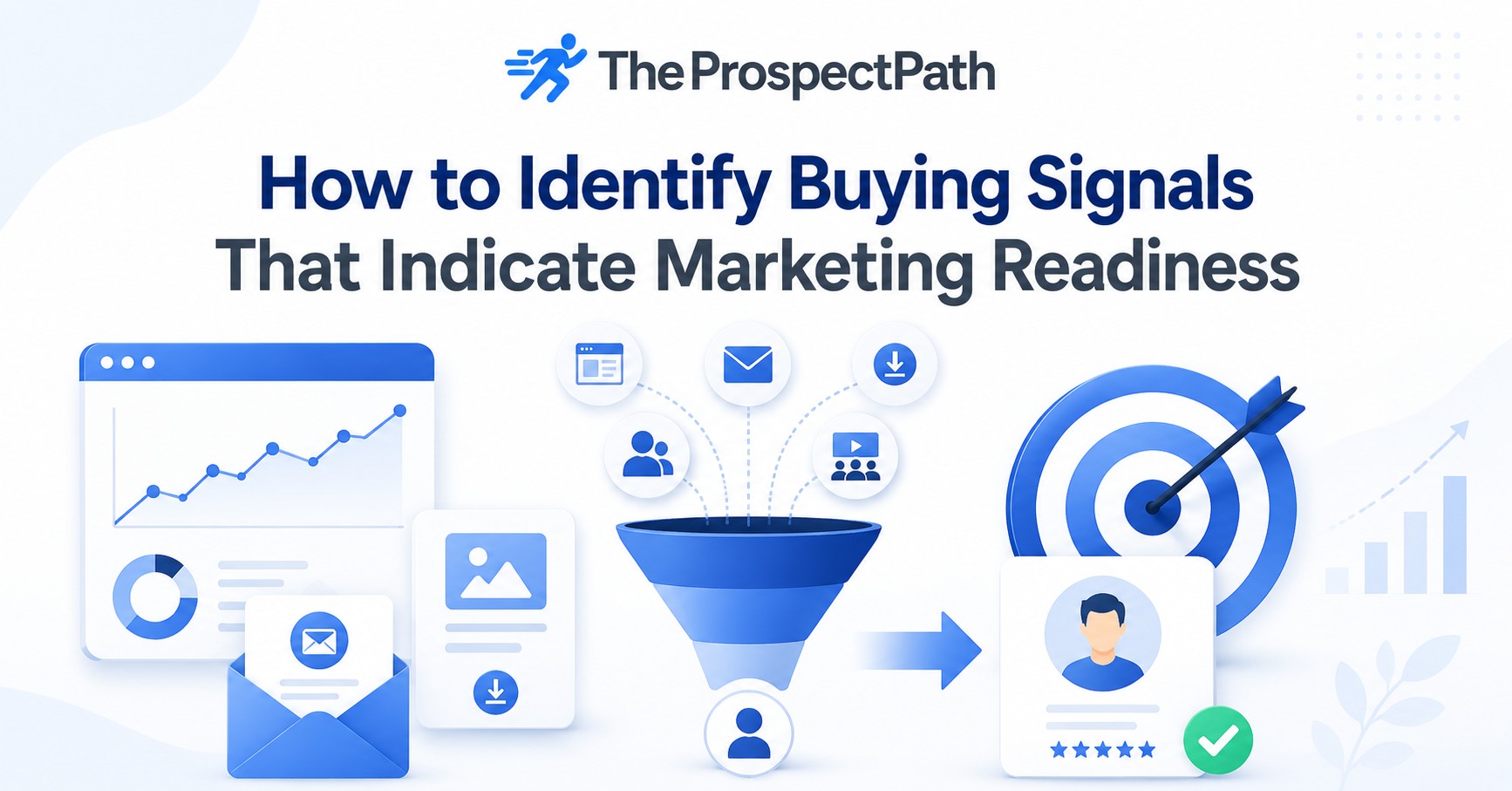
In today’s competitive B2B landscape, generating a large volume of leads is no longer enough to drive consistent business growth. Sales teams are under increasing pressure to focus their time on prospects who are genuinely interested in purchasing rather than chasing contacts that may never convert. This is where Marketing Qualified Leads (MQLs) play a crucial role.
An MQL is a prospect who has demonstrated enough interest in your products or services to be considered ready for further engagement by your marketing or sales team. Identifying the buying signals that indicate marketing readiness allows businesses to prioritize high-potential prospects, improve conversion rates, and maximize return on investment (ROI). Understanding these signals is essential for building an effective B2B lead generation strategy.
What Are Buying Signals?
Buying signals are actions, behaviors, or interactions that suggest a prospect is actively researching a solution or considering a purchase. Unlike casual website visitors, prospects displaying buying signals have shown measurable interest in your business and are more likely to progress through the sales funnel.
These signals help marketing teams distinguish between general inquiries and genuine sales opportunities, enabling them to deliver qualified leads to sales representatives at the right time.
Why Buying Signals Matter for MQL Generation
Not every lead is ready to speak with a salesperson. Some prospects are simply gathering information, while others are actively evaluating vendors and preparing to make purchasing decisions.
Recognizing buying signals helps businesses:
- Improve lead qualification accuracy
- Increase sales productivity
- Shorten the sales cycle
- Deliver more personalized marketing campaigns
- Improve marketing ROI
- Increase lead-to-customer conversion rates
Instead of measuring success solely by lead volume, organizations can focus on generating high-quality MQLs that have a greater likelihood of becoming customers.
Key Buying Signals That Indicate Marketing Readiness
1. Repeated Website Visits
When prospects visit your website multiple times, especially within a short period, it often indicates growing interest. Returning visitors are typically researching your company, comparing solutions, or validating potential vendors.
Particular attention should be given to visits to:
- Product or service pages
- Pricing pages
- Case studies
- Customer success stories
- Contact pages
These pages generally indicate stronger purchase intent than blog articles alone.
2. Content Downloads
Prospects who download valuable resources demonstrate a willingness to exchange their information for knowledge. High-value content often reflects a deeper interest in solving specific business challenges.
Examples include:
- Whitepapers
- Industry reports
- eBooks
- Buying guides
- Product brochures
- Solution comparison documents
The more targeted the content, the stronger the buying signal.
3. Webinar and Event Participation
Registering for webinars, virtual events, or industry workshops indicates that prospects are actively educating themselves about relevant solutions.
Even stronger buying signals include:
- Attending the entire session
- Asking questions during the webinar
- Downloading presentation materials
- Requesting follow-up discussions
These interactions often indicate genuine interest beyond simple curiosity.
4. Email Engagement
Email marketing remains one of the most effective channels for identifying buying intent.
Prospects showing marketing readiness often:
- Open multiple emails
- Click on product-related links
- Download shared resources
- Respond to campaigns
- Request additional information
Consistent engagement across multiple email campaigns usually indicates increasing interest.
5. Requesting Product Information
One of the strongest buying signals occurs when prospects directly request additional information.
This may include:
- Product demonstrations
- Pricing information
- Technical documentation
- Feature comparisons
- Proposal requests
- Consultation bookings
These actions suggest that prospects are actively evaluating purchasing options.
6. Positive Telemarketing Conversations
Telemarketing continues to play an important role in B2B lead qualification. A well-structured conversation often uncovers valuable buying signals that digital interactions alone cannot reveal.
Examples include prospects who:
- Confirm current business challenges
- Express dissatisfaction with existing vendors
- Share upcoming projects
- Discuss purchasing timelines
- Agree to schedule follow-up meetings
- Identify decision-makers involved in the buying process
These conversations provide valuable context for determining whether a lead should become an MQL.
7. Budget and Decision-Making Discussions
When prospects begin discussing budgets, procurement processes, implementation timelines, or internal stakeholders, they are typically progressing toward a purchasing decision.
This aligns closely with popular qualification frameworks such as BANT (Budget, Authority, Need, and Timeline), helping businesses prioritize leads that are genuinely sales-ready.
Combining Multiple Buying Signals
No single activity automatically qualifies a prospect as an MQL. The most effective lead qualification strategies evaluate multiple buying signals together.
For example, a prospect who:
- Downloads an industry report
- Visits your pricing page several times
- Opens multiple email campaigns
- Attends a webinar
- Responds positively during a telemarketing call
is far more likely to be marketing-ready than someone who simply visits your homepage once.
Using a lead scoring model that assigns points to different activities helps marketing teams identify high-priority prospects more accurately.
Aligning Marketing and Sales
Marketing readiness should never be determined by marketing alone. Successful B2B organizations align both marketing and sales teams around shared qualification criteria.
Clearly defined MQL standards help ensure that only qualified opportunities are passed to sales, reducing wasted effort while improving pipeline quality and customer acquisition rates.
Regular feedback between both teams also helps refine lead scoring models and improve future campaign performance.
Conclusion
Identifying buying signals is one of the most effective ways to improve MQL generation and maximize the impact of your B2B marketing efforts. By monitoring behaviors such as website engagement, content downloads, webinar participation, email interactions, telemarketing conversations, and purchase-related inquiries, businesses can identify prospects who are genuinely ready for meaningful engagement. Rather than focusing solely on lead quantity, organizations that prioritize marketing readiness create stronger sales pipelines, achieve higher conversion rates, and generate greater long-term revenue.
At TheProspectPath, we help businesses generate high-quality Marketing Qualified Leads (MQLs) by identifying and nurturing prospects who demonstrate genuine buying intent. Our targeted B2B email marketing campaigns engage decision-makers with relevant content, while our professional telemarketing services qualify prospects through meaningful conversations, validate buying signals, and identify opportunities based on key qualification criteria. By combining personalized outreach with proven lead qualification strategies, TheProspectPath helps organizations build stronger sales pipelines, improve conversion rates, and accelerate sustainable business growth.

0 Comments